Monday, November 8, 2021

Accessibility In Higher Education Needs to Go Beyond An Accommodations Statement

At my university, most Professors (although not all) have an accessibility statement in their syllabus. It usually outlines the process for getting accommodations in their class- getting them approved by the disability office and then discussing them with the professor early in the semester. I appreciate this statement because it tells students with disabilities the exact steps they need to take.

However, this statement does not go far enough. I, like many other students with disabilities I have spoken with, am worried about using my accommodations. I’m worried about discussing them with my professors because of fear of stigmatization. As a graduate student, my relationships with professors will be very important in my career, and I don’t want them to think that I’m less capable because of my disability.

This semester, I am taking a course where each week is taught by a different professor, so each professor gives and grades assignments. This means that to get accommodations in this class, I will need to tell all of the professors about my accommodations. And honestly, I’m terrified to do it. This is the first time I’ll be meeting most of the professors in my department, and I don’t want them to think less of me. Most of the conversations about accommodations I’ve had in the past were positive, but some were not. Throughout my five years in academia, I’ve had many professors suggest that I should not be in their class and that I might not be able to handle this career choice, because of my illness. 

Professors don’t understand that these accommodations don’t make me less capable of pursing this career. The symptoms that affect my ability to succeed in the classroom might have no effect on my performance at work. Beyond that, symptoms and treatments can change, so it’s possible in a few years after I graduate I will have different physical abilities than I currently do.

Luckily, many professors do understand these things and are supportive of students with disabilities. But in higher education, disabilities are not talked about. I have no way of knowing which professors will support me, and which professors will fight against the accommodations I’m requesting.

I should not have to worry that asking for accommodations will affect my standing in the classroom or within the department. I should not have to fear criticism from professors. I should not have to fight for accommodations the school has already approved. I should not have to wonder if the professors I’ve worked alongside for three months (and not told them) will look at me differently.

Professors need to step up. There needs to be more education for professors about disability accommodations. They need to be trained how to best support students, and they need to be taught that disabilities do not determine a student’s identity. They need to talk about accommodations at the beginning of the class, and be clear that they will support any university-approved accommodations.

Students with disabilities already bear a lot of the cost of dealing with this ableism- the accommodations process is often very complex and requires a lot of work from the student. However, I think that as much as we are able to, we need to continue to fight the ableism we see in academia. We need to advocate for our accommodations when professors doubt us. We need to be honest about our disabilities and how they affect our schoolwork. And if professors don’t listen, we need to hold them accountable and turn to the disability office or other people for support.

As we return to in-person school, I hope that we can make accessibility and ableism a part of the conversation. I hope that students with disabilities can feel both welcomed and supported in their environments, and I hope that all students and Professors will work to make that happen.


A picture of two trees, including a blooming cherry tree in front of an old brick building. A sidewalk between a grassy lawn leads to the building
Returning to campus

Tuesday, October 19, 2021

To the Doctor Who Helped Me Learn to Live With Chronic Pain

 Dear Doctor,

I still remember the first day we met. I was looking forward to the meeting, finally getting to see a “Pain Medicine Doctor”. I went into that meeting so optimistic: I hoped that you would finally have the answers I had been waiting for. A way to stop living in constant pain. A way to get back to living the life pain took away from me.

And to your credit, you did have some answers. No clear ‘magic bullet’, but you did suggest other tests I should have done, medications we could try, and other specialists who might be able to help. Most importantly, you assured me that you would help me, that you believed in my pain and you would work with me to make it better.

But I was also very disappointed. I had hoped that you would be able to take away the pain, but you made it clear that wasn’t possible. Over two years later, I still remember only one thing you told me. You had asked what I was doing before I got sick, and I explained how I had loved hiking with friends and farming. You told me “If two years from now you want to be hiking, you need to learn to hike with pain. I won’t be able to take away the pain, but I can help make it more manageable and I can teach you how to hike anyway.”

A picture of a trail through a forest. Ground is covered with golden leaves and it is very foggy.
I love hiking

Today, two years later, I am infinitely grateful for what you told me. First of all, it showed that you believed me. After being told so frequently that the pain was “all in my head”, this was a huge relief. It also showed that you understood the effect the pain was having on my life. Unlike some other doctors, you didn’t tell me that I should just “start running again” or pretend the pain wasn’t there. You didn’t blame me, and you didn’t make me feel like I was too weak to handle the pain.

Instead, you gave me hope. It took me a while to see it, because it wasn’t the hope that I was expecting. I had assumed a pain medicine doctor would get rid of pain, which you didn’t. But you did give me hope that I would be able to get my life back. You were honest, and didn’t pretend it would be easy, but you made it sound possible. At a time when I couldn’t see any future for myself, you showed me that one was still possible.

Not only did you give me hope, but you told me that you would help me get there. You told me that you would help me learn to manage the pain. You made living with pain a skill that could be learned, instead of an inherent trait that I thought I was too weak to handle. You made me believe that my life could get better. And unlike the many doctors before you who had been eager to pass me off, you assured me that you would help me along the way.

I’m writing this letter two years ago after an incredible weekend of hiking. During a 20 mile hike, I remembered what you had told me. And I realized that I am living a life I wouldn’t have believed is possible: working a job I love, in graduate school, and I get to go hiking. There are days when it is unbelievably challenging and when I am overwhelmed by the pain. But even with the pain, there are days when I am able to go hiking and do the things I love. And for that, I am infinitely grateful.

A photo looking out over a river. There's a few trees in the foreground that are losing their leaves for the fall. Then the river curving through fields and mountains. A sunny day.
From my hike last weekend

Thank you for everything you did to help me. Most of all, thank you for believing in me when I couldn’t. Thank you for reminding me that hope can take many forms, and for helping me build a life I love.

Monday, October 18, 2021

A Letter To Myself When I Have To Cancel Plans Because of Chronic Illness

Dear Annie,

 I know you debated for half an hour over how to phrase the text, but essentially the message was “I’m sorry, I won’t be able to come today because I’m sick.” It’s not a new message, because this isn’t a new occurrence. Yes, it felt different because it was a new friend. It felt scarier — you’ve never told them about your chronic illness, so they have no context to understand why you had to cancel the plans that seemed fine yesterday. 

 It’s hard because it feels like your fault. After all, you’re the one who told your friend that you couldn’t do it. But it’s not your fault. Being sick is not your fault, and the symptoms that come with it are not your fault. This is not something you signed up for, or something you ever would have chosen. 

 I know that it feels like you’re letting people down. I’m sure your friends are sad, because like you, they were probably looking forward to today. And it never feels good to be the one to take away that opportunity. But it isn’t you who decided not to go, it’s your illness. There was no way you could physically go, and you did the responsible thing by letting your friends know that as soon as you could. 

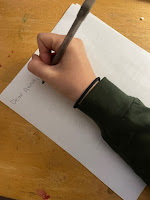
Large piece of paper with a woman's hand writing at the top. The first line is the only thing written, and it says "Dear Annie"
Writing this letter
It’s okay to feel sad because of what you know you’ll miss out on. I know it’s so easy to imagine your friends having fun without you while you’re homesick. And I know you were really hoping today would be different. But you will have another chance. 

 I know it feels like you canceled because you aren’t strong enough to push through it and go anyway. But canceling on them is not a weakness. You push yourself all the time to do things that you need to do even when it feels like too much. It’s never easy to say no, but you need to let your body rest. It definitely doesn’t feel like it right now, but you are doing what you need to do. And hopefully, good friends will support you as you prioritize your health. 

 I know it’s hard, but try to let this go. Take today to rest, and do what you need to do in order to take care of yourself. Hopefully, you will feel better soon and be able to spend more time with your friends.

Friday, January 22, 2021

A Letter to my Past Self In Chronic Pain

Dear Annie, 

           I believe you. I see you. I see that you are in pain that nobody can understand, that nobody can even imagine. I know that you’re scared. And doubting yourself constantly. But please, please know that there will be a day when you will be better. A day when you will feel physically okay and you will love the life you have created.     

            It can be so terrifying. You never know what will make it worse. Or you do know things that make it worse but you need to keep doing them. Realize that this is a terrifying thing, and it is completely reasonable to be terrified. Most people avoid pain, and never have to experience it this often. You are so so strong. You are strong enough even when you are terrified.

Chronic pain can be extremely isolating. It’s so hard when nobody believes you. When nobody understands because you “look fine” or “you did it last time”. People will always doubt you. People will judge you, people will doubt you, and they will treat you differently. Sometimes even people you trust or expected to help you. But that doesn’t make it untrue. It doesn’t mean that you’re not facing something extremely difficult they can’t understand. Don’t let other people’s doubts make you doubt yourself. You know yourself better than anyone ever can.

           As Mary Anne Radmacher says, “Sometimes courage doesn’t always roar. Sometimes courage is the quiet voice at the end of the night saying I’ll try again tomorrow.” You are fighting something very difficult. Regardless of whether or not other people understand that, it’s true.

Sunrise over the ocean
 

            There will be times when you feel like you can’t keep going. When you feel like it isn’t worth it. There will be times when a doctor will tell you to come back in three months but you won’t be able to imagine an hour, let alone a day or months in that much pain. There will be times when you will want to sleep forever because it’s the only way to escape the pain. And yet there will be nights you never sleep because of the pain.

            But when it gets hard, remember it will get better. It will get better in ways you never imagined. You will get better at managing your pain, or you will be lucky enough to find treatments that make it go away. It will take time, but it will be so worth it. You will still have hard days, but you will also have incredible days. You will rediscover dreams that feel so foreign right now. And you will work until they come true. Because you will be strong. You are so strong. No matter what it feels like. If you need help today, reach out to someone who can help you. And remember that you are so so strong and you can do this.

Tuesday, December 1, 2020

Fun Activities to Avoid Zoom Fatigue

I don’t know about you, but I’ve been spending a lot of time on Zoom recently. It has been a great way to stay connected with friends while staying safe. But especially after the holidays, Zoom fatigue is real. 

I often find it hard to commit to talking with friends on Zoom/Facetime because it seems like such an energy commitment, and I never know if it’ll be worth it. When you're on several video calls a day, it can be exhausting, even if you are excited about who you're talking to.

One thing that I’ve found helpful is to have activities to do during our call. That way, it is something that we can look forward to. Instead of having the same conversations about what we’re doing or not doing because of the pandemic, we can make memories together. Here are some of the activities I've been doing:

Games

  •  GeoGuessr- you get dropped somewhere in the world on google maps streetview. Easy to do on Zoom if one person does it and shares their screen.
  • Skribbl- just like pictionary. It gives you a word and you draw it, others guess. 
  • Scattergories- Same as regular scattergories, great game for people who are good at thinking fast.
  • Code Names-A guessing game where you’re assigned roles and have to get specific people to guess words. Requires four people. 
  • Make your own trivia/jeopardy game. One of my coworkers does a weekly Zoom with friends and each week someone different makes a trivia game based on a topic of their choosing.
    Games

    Other Activities 

If you're running out of games to play together, try learning a new skill together!

  • Crocheting- it’s actually really easy to learn basic stitches. You can all work on the same patterns and share your projects over several calls. Also a great activity for when you’re watching TV or listening to a podcast or audiobook. 
  • Learn a language- challenge your friends to do a call in another language.
  • Cook or bake together- I used to often bake with friends, which I don’t do anymore during the pandemic. However, we still love sharing recipes. If you share a recipe in advance so everyone can get the ingredients, you can all cook the same thing during your video call. 
  • Book Club- Works the same as a normal book club, choose a book then meet to discuss (either chapter by chapter or the whole book). Also fun to do with poetry or children’s books if hard to find time for everyone to read. 
  • Podcast Club- Similar to book club, but choose a podcast to listen to each week before you meet so you can discuss it. 
  • Writing Group- Great way to dedicate time to your writing and get feedback. Could structure it so many different ways, maybe you all write during your meeting, or maybe you bring a certain amount of writing to each meeting and share it with others. Fun to do with poetry, short stories, books you’re writing, essays, or even blog posts! 
  • Watch a movie together. Someone can share their screen, or do Netflix Party or similar.
I would love to hear your ideas too. Please share in the comments, always looking for new ideas!

Friday, August 28, 2020

Ableism In Yoga


            When I recently listened to the Yoga is Dead Podcast episode “Vegans killed yoga,” it first made me reflect on the need to stop prioritizing the way ourbody looks. But then, as I thought more about it, I realized that we also need to stop idealizing certain ways our body can act. To do anything else is to further enable the culture of ableism commonly seen in yoga and other wellness.


            The podcast talked about a man who was upset by the fact that some yoga classes were called “advanced”, when on some days for someone with chronic illness “advanced” is getting out of bed. As someone who has experienced chronic illness, I immediately connected to this feeling. It isn’t fair to label some actions as for “more advanced yogis” when in fact, it has nothing to do with your ability to do yoga. It has to do with physical ability. And for some, that might look different.


            For me, there are days when getting out of bed is not possible, and there are other days when I can get up but I could never dream of doing an “advanced” yoga class. And other days, those are my favorite things. But on the days when it isn’t possible, the last thing I need is someone else telling me that I “should” be able to do that. That as a yoga teacher, or someone who has been practicing yoga for a long time, I should be at a high enough level to do that. Because my ability to practice yoga should have nothing to do with what my body can physically do on any given day. On those days, the voice in my head usually makes me feel guilty enough for things I can’t do. If I can go to a yoga class or practice yoga at home, there is no reason I should feel guilty for what that practice looks like or doesn’t look like.


            Yoga is defined as “the ability to direct the mind without distraction or interruption” according to Patanjali’s Yoga Sutras. This text is often considered by yoga teachers and experts to be the standard guide to yoga, as it outlines basic principles that yoga follows. In this definition, it says nothing about the physical body. Similarly, in the Bhagavad Gita as translated by EknathEaswaran, Krishna (the embodiment of The Self) says, “yoga is perfect evenness of mind.” (Easwaran 94). Yoga isn’t about contorting your body into poses for pictures on Instagram. Some of the most accomplished yogis in the world never practice many of the asanas. Monks are advanced yoga practitioners, even those who sit still for hours every day, for they are practicing evenness of mind. Yoga literally means- to yoke- or union, of body, mind, and soul. Thus, yoga is any practice which unifies the body, mind, and soul.


Meditation is practicing yoga
 

            In my own life, I have seen the negative effects of this type of language. In college, I never went to “power yoga” with my friends. I was too sick to be able to do the physically demanding poses, and I didn’t want to be judged as not being “good at yoga.” The class was very fitness-based, and people didn’t go to that class who couldn’t keep up. I once heard people laughing about the “old people” who came to the class and “couldn’t even do the two minute planks.” After that, I knew I would never go to that class. There have been times in my life when I can do those planks, but at that point in my life, I would often be in tears of pain just from walking to class. Why would I subject myself to a yoga class where I would be mocked for not being able to keep up? Luckily, I found another workshop that was based on mindfulness and reflection that allowed me to practice yoga in a group setting that wasn’t physically demanding. I could go there no matter how I was feeling, and knowing that made me always feel welcome and part of the group: they would accept me even knowing that I was sick. These experiences have showed me how personal the problems that ableism creates can be. I already felt so guilty about my physical disabilities during those years that I would never have put myself in a setting where my ability might be questioned. Until I found that mindfulness course, I avoided any mention of yoga because I feared my body “couldn’t do it anymore.”


            I realize that yoga teachers need a way to set “levels” for their courses so students can know what to expect. I plan to use an idea that was used to describe our college orientation trips: flavors of salsa. The most physically demanding classes will be “Spicy”, moderate intensity will be “medium,” and less active/restorative classes will be “mild.” This way, there is no correlation between yoga “skill” and the type of class. How can you make the language you use in your yoga classes more welcoming to all? This week, as you practice yoga in your own practice and in classes, be aware of ableism as it appears. Be gentle with yourself first: it’s okay if you can’t do every pose or it doesn’t look the way you wish it did. Remember, there is no way yogis are supposed to look. Be yourself, and be proud of it.

Tuesday, August 25, 2020

Can we stop complimenting people for this?

I just listened to an episode of the Yoga Is Dead Podcast called “Vegans killed Yoga.” And I didn’t expect to have such a strong reaction to it, but I definitely did. The part that resonated the most strongly with me was the common practice of equating thinness with wellness. In yoga, we often see white, thin, strong women as the ideal “yoga body.” Obviously, there is no yoga body. But that isn’t always easy to remember. And I think everybody (and especially anybody with influence in the wellness industry) needs to actively work to dismantle this idea.


            In this episode, they did a great job of discussing how often being heavier is often healthy, while losing weight can be a sign of unhealthy habits or a symptom of disease. People often loose weight when they get cancer, or while on medication for many different diseases. Additionally, some people lose weight because of unhealthy eating habits: maybe they restrict their eating and aren’t giving themselves enough fuel and nutrients for their body to be healthy.


            For me personally, this has really been an issue lately. When I was extremely sick with a chronic illness for the past two years, my weight fluctuated. At the beginning, I gained weight because I stopped almost all physical activity because it was too painful to even walk to class. But more recently, I’ve been losing weight.


            As I’ve lost weight, I’ve been more hyperaware of comments surrounding my weight. Some people have complimented me on it, “Wow, you’ve lost weight recently,” or “You look so much healthier now.” Other people have made comments implying that everyone should lose weight-when a cousin sent a picture of the pre-packaged breakfasts she was given at college during COVID, another relative responded “Well at least you won’t have to worry about gaining weight.”


            When I hear those comments, part of me immediately realizes its wrong. I want to speak up, but usually I don’t. And I think the reason that I don’t is because I still partially believe that thinness is the ideal. Even though I know that the way I’ve lost weight hasn’t been healthy, a part of me is happy that they’ve noticed. It feels like a compliment: like they’re acknowledging the work I’ve done.


           Even if they're complimenting me on "looking strong," I don’t like it because I know they’re still referring to this unrealistic ideal. But I am grateful when people acknowledge the work that I’ve done, not in the way that it’s changed my body, but in the way that it’s enabled me to live a healthier lifestyle. I’ve gotten stronger not because of changing my diet, but because of hiking more, running, and doing yoga daily. And that is something I’m proud of and something I'm grateful to be able to do. Doing these things makes me feel strong and healthy, and I believe that is great.


Hiking adventures appreciating what my body can do


       However, I will not accept any “compliments” about how my body looks. Because while I’ve gotten stronger, I’ve also lost weight that I shouldn’t have lost. I’ve lost weight because I started a new medication that made me so nauseous I couldn’t stand the thought of food, and would have to force myself to eat small things throughout the day so I won’t pass out. There’s nothing healthy about that. And I’ve lost weight because I’ve had a really bad sore throat for a long time which makes me not want to eat. And that’s not healthy either.


            When people compliment me on how my body looks, it doesn’t matter if they’re complimenting me on my weight or the fact that I look “stronger.” It isn’t okay. Because they don’t know the story, they’re only comparing me to what they see as the ideal.


            I’m writing this article as a reminder to myself and to others. I don’t need to share my story when I’m “complimented” about my weight loss. And even though a part of me appreciates the compliment because it feels good to match the ideal of “strength” or “wellness,” I am trying to practice being more aware of the problems that come from these messages and start conversations. Try to take a few minutes today to reflect on your thoughts about wellness. What does a healthy body look like to you? Is that what your body actually looks like when it feels its best?